
Vendor Sprawl in IT: The Hidden Problem Costing You Time, Money, and Sanity and How SafeStorz Fixes It

You’ve probably heard the phrase “less is more,” but in IT it often turns into the opposite: more vendors, more problems. You might even have said it yourself: “I have one company for phones, another for IT support, and another for backups. It’s a management nightmare.”
That frustration has a name—IT vendor sprawl—and while it often starts with good intentions, it quietly drains budgets, erodes accountability, and makes resilience harder than it needs to be.
The good news: it’s fixable. And helping organizations escape vendor sprawl is a core part of how SafeStorz operates.
What IT Vendor Sprawl Really Is
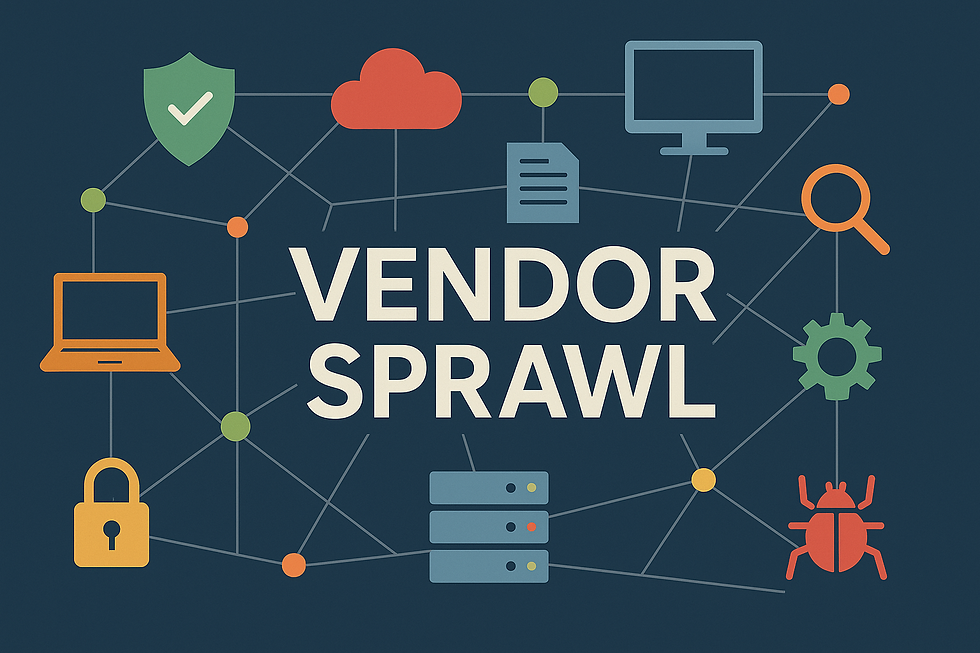
Vendor sprawl happens when organizations accumulate disconnected technology vendors and tools to solve isolated problems. Marketing adopts a scheduling platform, sales brings in a CRM, IT layers on security tools, backups live with a separate provider, and hosting sits somewhere else entirely. Over time, this creates a web of subscriptions, contracts, dashboards, and support channels with no single point of control.
The impact isn’t theoretical. Complexity increases fast. Teams juggle multiple portals and credentials, billing cycles drift out of sync, and security standards vary from vendor to vendor. What began as convenience-driven decisions slowly becomes an operational drag. IT teams spend more time managing vendors than enabling the business, and when something breaks, accountability gets blurry.
Why Vendor Sprawl Becomes a Strategic Risk
Vendor sprawl doesn’t just clutter your stack—it undermines predictability and resilience.
With every additional provider comes another support desk, another SLA, another billing relationship, and another security model. That fragmentation makes it harder to plan, harder to secure, and harder to recover. Budgeting becomes reactive. Incident response becomes slower. Risk visibility fades.
In effect, IT stops being a strategic advantage and turns into a management tax—one paid in time, money, and stress.
How SafeStorz Is Structurally Different
At SafeStorz, we recognized early that vendor sprawl isn’t just an inconvenience—it’s a systemic failure of ownership. That’s why our approach is fundamentally different from the “pile on more tools” model.
We don’t resell complexity. We remove it.
SafeStorz consolidates vendors rather than adding to them. We take ownership of infrastructure outcomes end to end, eliminating finger-pointing between providers when something goes wrong. Our environments are designed around isolation, resilience, and predictability from the start—not patched together with bolt-ons later.
Instead of managing five or six disconnected vendors, clients work with one partner who is accountable for uptime, recovery, and security as a complete system.
A Real-World Example: Consolidation That Delivered Results
Recently, SafeStorz partnered with a law office operating under significant vendor sprawl. They had separate providers for IT support, backups, security tools, hosting, and Microsoft licensing. Management was fragmented, security policies were inconsistent, and costs had crept upward over time with little visibility into what they were actually paying for.
SafeStorz stepped in to unify their systems under a single, cohesive platform. We simplified management, tightened security controls, rationalized Microsoft licensing, and aligned infrastructure with how the firm actually operated.
The outcome was immediate and measurable: a more resilient, easier-to-manage environment and an overall cost reduction of roughly 40% compared to their previous spend. Fewer vendors. Clear accountability. Real control.
From IT Chaos to Confidence
Vendor sprawl often grows quietly, but its effects compound quickly—lost time for your team, budget surprises for leadership, and increased exposure when things go wrong.
It doesn’t have to be this way.
With SafeStorz, organizations simplify their technology stack, regain visibility into risk and cost, and move from reactive management to intentional design. IT becomes predictable again—not because nothing ever breaks, but because recovery and responsibility are clear.
IT shouldn’t be this hard or this noisy. It should be strategic, secure, and manageable. That’s the SafeStorz approach.
A Smarter Next Step
If you’re unsure how many vendors you’re really managing, where your risk lives, or how much redundancy and waste has crept into your stack, the next step isn’t another purchase—it’s clarity.
SafeStorz offers consultative assessments that map vendors, surface hidden dependencies, clarify risk, and identify opportunities to consolidate without sacrificing capability. If you’re ready to replace sprawl with control and build an IT foundation that actually holds, start the conversation at SafeStorz.com.


